Asbestos in Older Oakville Homes: What to Know Before You Renovate
Written by Alex Ott on November 2, 2026
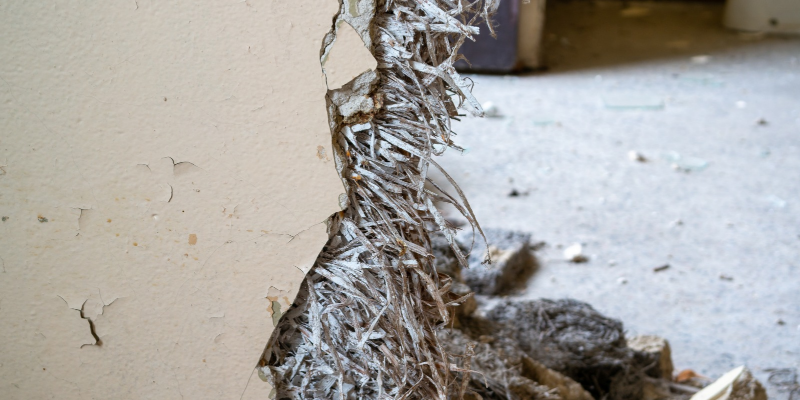
A renovation is often the first time in decades that anyone has looked inside a home’s walls, ceilings and floors. In an older Oakville home, what turns up can include asbestos. Knowing when asbestos was used in homes in Canada, and where it tends to show up, is the first step in planning around it.
Asbestos that is left alone and in good condition is not a significant health risk. The trouble starts when a renovation disturbs it, which is why it belongs at the very start of planning, alongside everything else behind the walls that shapes a budget.
Key Takeaways
- Before 1990, asbestos was mainly used to insulate Canadian buildings and homes. Canada banned its import, sale and use as of December 30, 2018.
- It can be found in plaster, drywall, paint, caulking, floor and ceiling tiles, siding, roofing and pipe insulation.
- Undisturbed asbestos in good condition is not a significant health risk. Renovation work is what disturbs it.
- Testing before design keeps asbestos from stopping a project partway through.
From kitchens to full-home renovations, we bring your vision to life with craftsmanship, style, and attention to every detail.Transform Your Home Into a Masterpiece
When Was Asbestos Used in Homes in Canada?
According to Health Canada, asbestos was used mainly to insulate buildings and homes before 1990. It also turns up in a wide range of other older building products, so a home’s age is a good reason to ask the question rather than a reliable answer to it.
The federal government banned the import, sale and use of asbestos and asbestos-containing products, with limited exclusions, as of December 30, 2018. That federal ban is the one that applies in Ontario. It stopped new asbestos products from going into homes, but it did nothing to remove what was already installed. Asbestos in existing buildings remains under federal, provincial and municipal rules, which is where a renovation comes in.
Where Asbestos Shows Up in Older Homes
Health Canada’s list of older materials that may contain asbestos reads like a tour of a typical renovation. In walls and ceilings, it includes cement and plaster, surface treatments such as paint, drywall and caulking, and ceiling tiles. Underfoot, older floor tiles can contain it. In the basement, it may be in the insulation around hot water pipes and tanks, and in older furnaces and heating systems. Outside, house siding and roofing products are on the list.
Vermiculite attic insulation, which may contain asbestos, gets its own advice from Health Canada: don’t disturb it, and don’t try to remove it yourself.
None of this can be settled by looking at a wall or a floor tile. Ontario’s asbestos regulation sets out a laboratory method for testing samples, and it treats a material as asbestos-containing when it holds 0.5% or more asbestos by dry weight.
The reason all of this matters is what happens when the material is disturbed. Breathing in asbestos fibres can cause lung cancer, asbestosis and mesothelioma, according to Health Canada. The same guidance says there are no significant health risks when asbestos-containing materials are left undisturbed, isolated in an attic, sealed behind walls and floorboards, or tightly bound in products in good condition. A renovation changes that by cutting, sanding, drilling and pulling out exactly those materials.
What Ontario’s Asbestos Rules Mean for a Home Renovation
Ontario regulates asbestos work under O. Reg. 278/05, a regulation built mainly around contractors and their workers. One provision is worth knowing up front: it does not apply to the owner of a private residence that the owner or their family lives in, or to the owner of a residential building with no more than four units where the owner’s family lives in one of them.
That exemption covers the owner, not the people doing the work. Employers and workers carrying out repairs or alterations on a building are still bound by the regulation. If material that may contain asbestos turns up partway through a job and wasn’t identified beforehand, the contractor must notify a Ministry of Labour inspector and the owner. Work that would disturb that material can’t go ahead until it has been tested, or until it’s handled as though it does contain asbestos.
The exemption doesn’t turn removal into a do-it-yourself job, either. Health Canada’s advice is that if a professional finds asbestos, a qualified asbestos removal specialist should remove it.
The regulation sorts asbestos work into three types, based on the material, how much of it is involved and how it’s handled. Here is where some common renovation tasks fall:
| Task | Classification |
| Removing less than 1 m² of drywall with asbestos joint compound | Type 1 |
| Removing 1 m² or more of drywall with asbestos joint compound | Type 2 |
| Removing asbestos ceiling tiles intact, under 7.5 m² | Type 1 |
| Removing asbestos ceiling tiles intact, 7.5 m² or more | Type 2 |
| Removing or disturbing 1 m² or less of friable asbestos-containing material | Type 2 |
| Removing or disturbing more than 1 m² of friable asbestos-containing material | Type 3 |
| Cutting or sanding non-friable asbestos material with power tools that lack HEPA dust collection | Type 3 |
Friable material is anything that, when dry, can be crumbled, pulverized or powdered by hand pressure. Area is counted across the whole room or enclosed space, even when the work is split into smaller jobs.
Type 3 work is the most involved. The contractor has to notify a Ministry of Labour inspector before it starts, and every worker and supervisor on it must have completed Ontario’s approved asbestos abatement training. Indoors, the work area is sealed off in an enclosure kept under negative air pressure, with a decontamination facility, and the enclosure can’t come down until the area passes clearance air testing. The requirements turn on the details of each job, so it’s worth confirming them for your own project with a qualified asbestos professional.
From kitchens to full-home renovations, we bring your vision to life with craftsmanship, style, and attention to every detail.Transform Your Home Into a Masterpiece
How Asbestos Changes a Renovation’s Scope, Schedule and Budget
Health Canada recommends hiring a professional to test for asbestos before renovating or remodelling. From a planning point of view, that advice does more than protect your health. When testing happens before design, the scope and the quote reflect what is actually in the walls, ceilings and floors, rather than what everyone hopes is there.
The alternative is finding it during demolition. Material nobody identified stops that part of the work until it’s tested or handled as asbestos, and a pause in one phase holds up every trade scheduled behind it. Renovations stall because one step waits, and everything that depends on it waits too.
Sequencing matters even when asbestos is found early. Ontario’s regulation requires asbestos-containing material that may be disturbed by demolition to be removed, as far as practicable, before the demolition goes ahead. On Type 3 jobs, the space stays sealed until clearance testing passes. For projects that involve opening up walls or reworking a layout, that step belongs in the schedule from day one.
Testing and any removal are line items of their own, separate from the renovation itself. A small Type 1 task and a Type 3 removal involve very different requirements, so knowing which one you’re facing before the quote is final is what keeps the budget honest.
Test First, Then Design
Asbestos is a known quantity in older homes. Planned for, it becomes a step to schedule and price like any other. Left to be discovered with a pry bar, it becomes the surprise that stops a project cold. A clear renovation process puts testing where it belongs, ahead of design and well ahead of demolition.
Artisan Contracting by J. OTT has spent decades helping homeowners across Oakville and the surrounding area renovate with honest plans and accurate pricing. Contact our team for a free consultation, and we’ll help you build a renovation plan that accounts for what’s in your home before the first wall is opened.

Known as a straight shooter, Alex believes renovations should be built on transparency and trust. Over the years, he has developed strong relationships with skilled tradespeople who share his commitment to delivering the best quality work at a fair price. With deep knowledge of the renovation process (and the unexpected challenges that often come with it), Alex works closely with homeowners to create detailed plans that embody their vision the way they expect.